
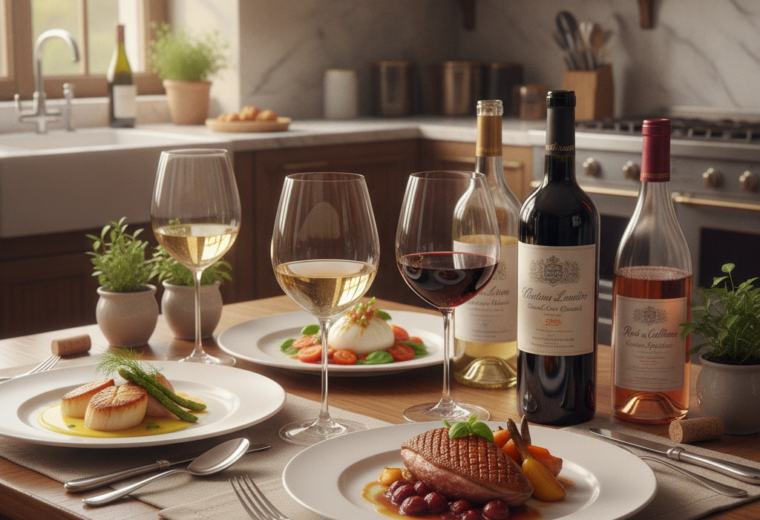
Why Wine Pairing Matters for Culinary Experiences
The Science Behind Wine and Food Pairing
Wine pairing is not just about taste; it is based on scientific principles. The flavors, aromas, and textures in wine interact with those in food. Acidity, sweetness, and tannins in wine can balance or enhance food flavors.
- Acid in wine cuts fatty or rich food.
- Sweet wines complement spicy dishes.
- Tannins in red wine enhance protein-rich foods like steak.
Benefits of Thoughtful Wine Pairing
Pairing wine with food improves your dining pleasure. It brings out subtle flavors, creates harmony, and makes meals memorable. A good match can make food taste better and wine more enjoyable. This practice also helps you appreciate new culinary traditions.
How to Choose the Right Wine for Your Meal
Understanding Wine Characteristics
Every wine has unique features: aroma, color, taste, sweetness, acidity, and body. Learn these basics before choosing the right bottle.
- Aroma: Smell the wine for fruity, spicy, or floral notes.
- Color: Light wines are usually softer; darker wines may be bolder.
- Taste: Is it sweet or dry?
- Body: Does the wine feel light or heavy in your mouth?
Matching Wine with Flavor Profiles
Wine and food should complement or contrast in flavors. If your meal is savory, look for wines with matching earthy tones. For sweet foods, try sweet wines.
- Pair red wine with bold, hearty flavors.
- Choose white wine for light, fresh dishes.
- Sparkling wine works well with salty and crispy food.
Considering Texture and Weight
Texture and weight matter in pairing. Heavy wines, like Cabernet Sauvignon, suit rich foods. Light wines, such as Pinot Grigio, are perfect for salads or seafood.
- Match the weight of the wine to the food.
- Avoid overpowering delicate dishes with strong wines.
Step-by-Step Wine Pairing Techniques for Home Cooks
Basic Rules of Wine Pairing
- Rule 1: White wine with white meat; red wine with red meat.
- Rule 2: Match intensities. Light wines with light foods, bold wines with bold flavors.
- Rule 3: Consider acidity and sweetness. High-acid wines work well with fatty foods. Sweet wines pair with spicy dishes.
Pairing Wine with Everyday Dishes
| Dish | Wine Pairing |
|---|---|
| Pasta with tomato sauce | Chianti or Pinot Noir |
| Grilled chicken | Chardonnay or Sauvignon Blanc |
| Pepperoni pizza | Syrah or Zinfandel |
| Fish tacos | Riesling or Albariño |
Creative Pairings for Special Occasions
- Pair ice wine with dessert for a sweet finale.
- Try sparkling wine with sushi for elegance.
- Choose a rich Malbec with grilled lamb for festive meals.
- Experiment with rosé for summer picnics.
Enhancing Culinary Experiences with Regional Wine Pairings
Exploring Classic Cuisine and Wine Matches
Many regions have traditional food and wine pairings. For example:
- French cheese with Bordeaux wine.
- Italian pasta with Tuscan wines.
- Spanish tapas with Tempranillo.
Incorporating Local Wines into Your Meals
Support your local vineyards by using wines from your region. These pair naturally with local ingredients. Ask your wine shop for regional recommendations.
- Try local white wine with fresh seafood.
- Pair local reds with grilled meats or vegetables.
Common Mistakes to Avoid in Wine Pairing
Overpowering Flavors
Avoid using strong wines with delicate dishes. For example, do not pair a bold red with a light salad. It will overshadow the food's taste. Always balance the intensity.
Ignoring Personal Preferences
Wine pairing guidelines are helpful, but your taste matters. If you prefer a wine, enjoy it with your meal. There is no wrong choice when it comes to personal preference.
Expert Tips: Elevating Your Wine Pairing Game
Advice from Sommeliers and Chefs
- “Taste your food and wine together before serving.”
- “Keep an open mind. Try new pairings and note what works.”
- “Use sparkling or rosé wines for tricky dishes!”
Trends in Wine Pairing for 2026
- Growing interest in vegan wine pairings.
- Low-alcohol wines for lighter, health-conscious meals.
- More people are exploring Asian cuisine with wine pairings.
Frequently Asked Questions About Wine Pairing
- Q: Can I use red wine with fish? A: Yes, lighter reds like Pinot Noir can work with fatty fish.
- Q: What is a good starter wine for pairing? A: Sauvignon Blanc is versatile for salads, poultry, and seafood.
- Q: Should wine be served cold or warm? A: Serve whites and rosé chilled; reds slightly cool, not room temperature.
- Q: How do I store wine at home? A: Store in a cool, dark place on its side to keep the cork moist.
Resources for Further Learning and Inspiration
- Visit local vineyards and attend tastings.
- Read books such as “Wine Folly” for simple guides.
- Watch online tutorials and join wine pairing courses.
- Follow sommeliers on social media for daily tips.
Summary: Wine pairing transforms meals from ordinary to extraordinary. Understanding wine characteristics, flavor profiles, and regional traditions improves your experience. Start with basic rules, experiment confidently, and adjust pairings to suit your taste. Use expert advice for advanced skills. Explore new trends and resources for inspiration. Take the first step by pairing your next meal with a thoughtful wine choice.